

Start here
Examples
Four complete apps, each with its own design language and a full Docent setup — running in the browser, with the source on GitHub.
Four small products rather than four demos. Each one is a plausible slice of a real interface with its own typography, palette and layout, so you can see what a tour looks like when it has to live inside someone else’s brand instead of next to it.
Every app runs the manager (useDocent / createDocent) alongside one tour the app draws itself, so both halves of the API appear in all four.
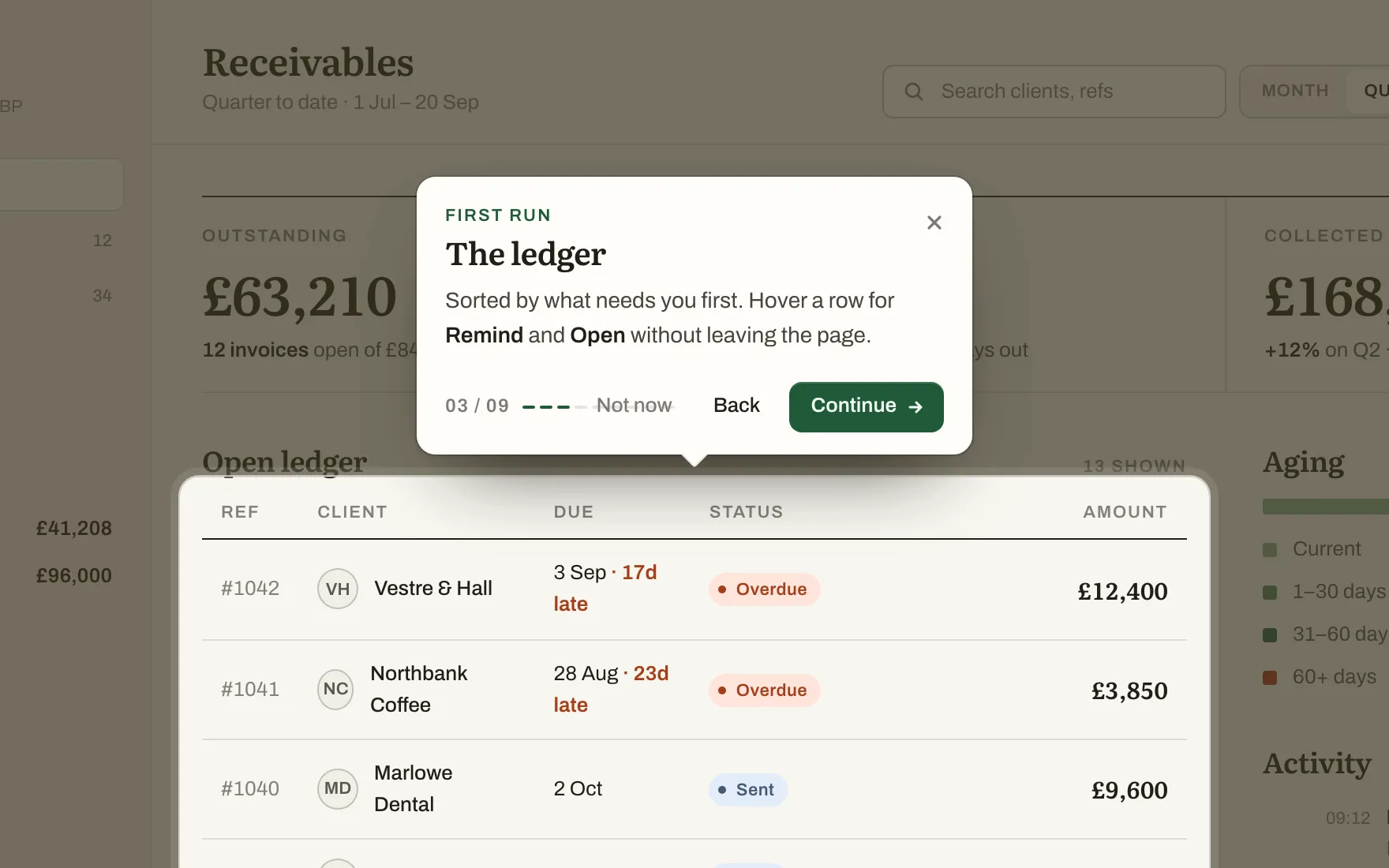
LedgerlineReact
Receivables for a design studio. An auto trigger that fires once per person, steps that hand control back to the user, a step that waits for a drawer to mount, traits gating a release note, and three templates.
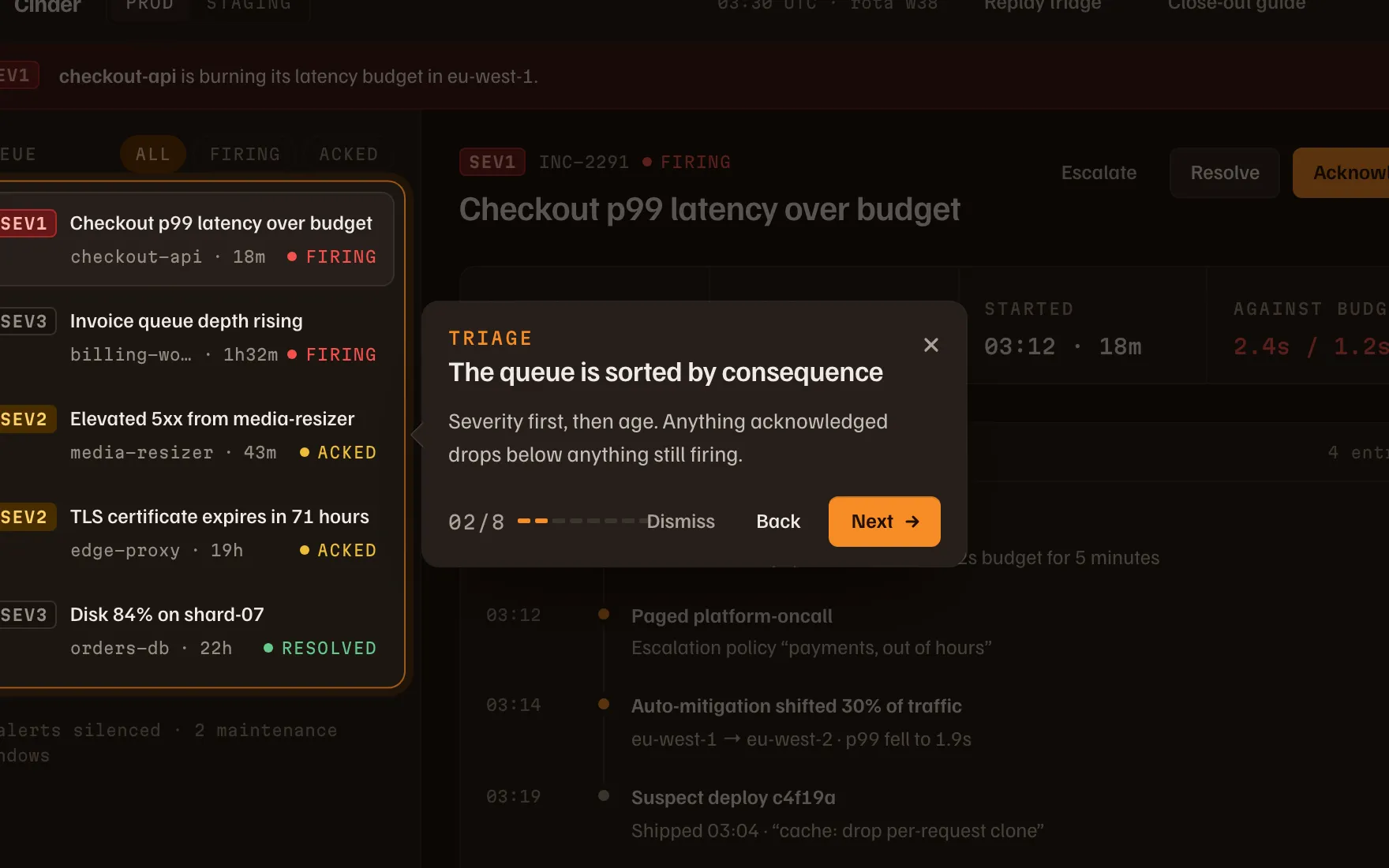
CinderVue
An on-call incident console. A tour triggered by an element appearing rather than a timer, a step that waits for a checklist to be revealed, and a dark surface with brand tokens layered over it.
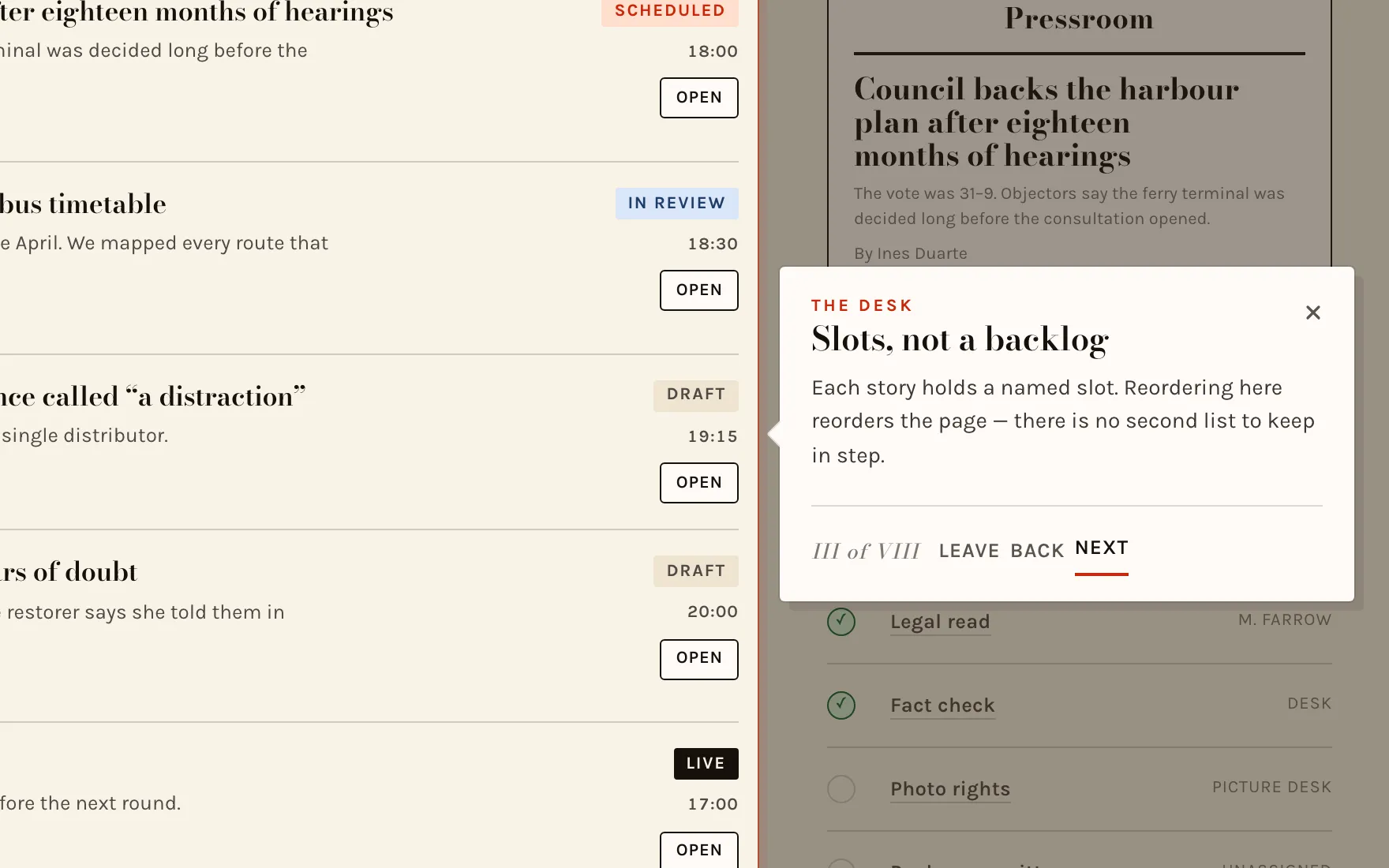
PressroomSvelte
A newsroom run of show. The buttons slot replaced with the paper’s own controls, a folio counter in roman numerals, and a hand-drawn connector for the galley note.
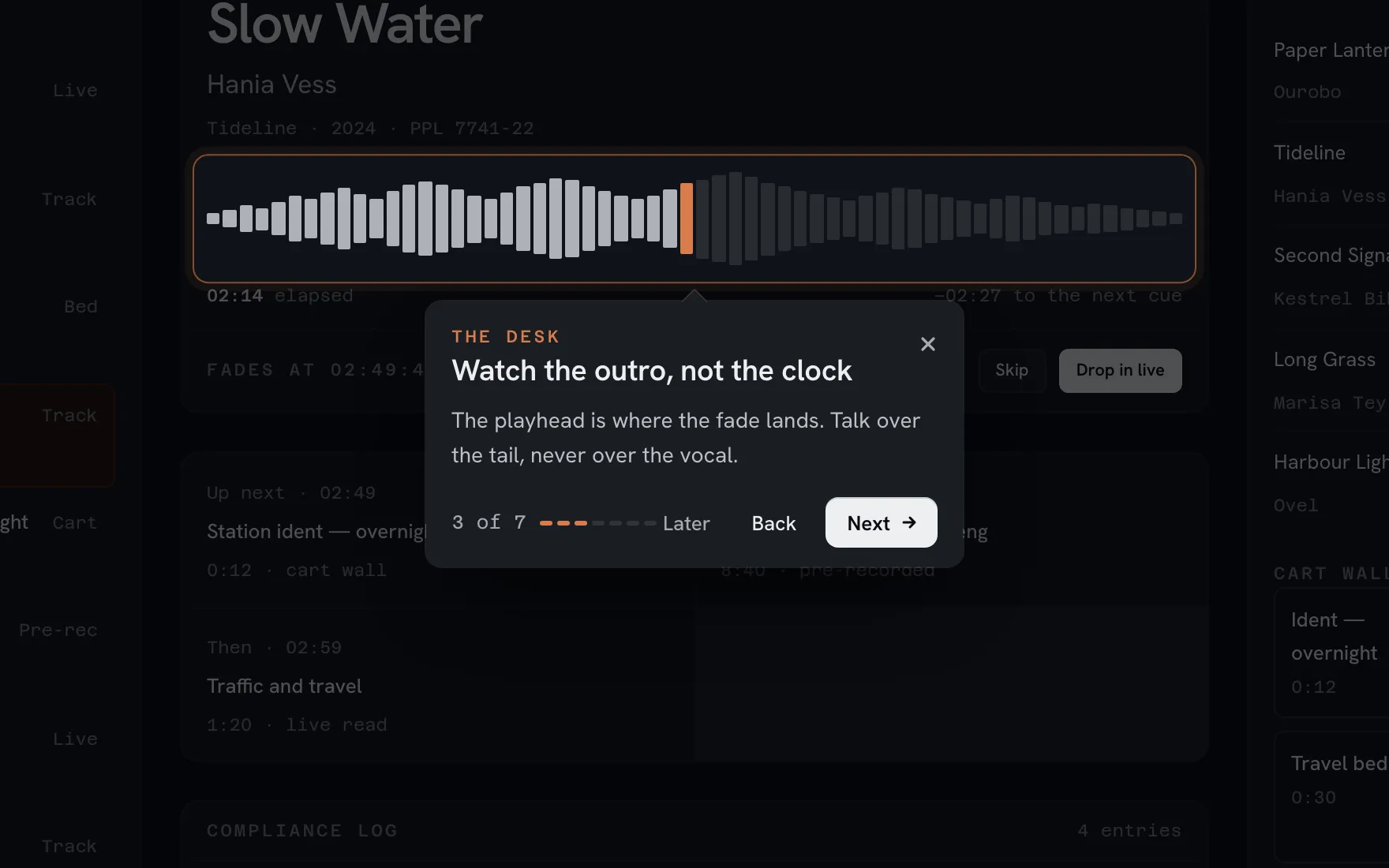
NocturneNo framework
An overnight radio playout desk. Templates, slots and a headless popover built with document.createElement, plus a custom condition that keeps a tour from running when the studio is off air.
Linking into a tour
Section titled “Linking into a tour”Each app reads a start parameter and runs that tour on load, so a link can drop someone straight into the thing you are describing:
/examples/vue/?start=cinder-postmortem/examples/vanilla/?start=nocturne-handoverReading the source
Section titled “Reading the source”Every app keeps its tours in src/tours.ts, its renderer defaults and templates in src/tour-theme.ts, and its app-drawn popover in src/TourCard.*. Those three files are the whole integration; the rest is an ordinary app.